The solution comes from network security applications that perform active port scanning and banner grabbing in order to determine open ports, and the applications / services behind them. Such solutions give instant visibility into the security of your server from the outsider's perspective, by mimicking attacker's behavior. Some solutions gather extended information about the applications and services behind open ports, and also point out potential vulnerabilities which may be exploited.

During the discovery phase you discover as much information about your target as possible. Most software will run on their default port and thus knowing which ports are open gives you some information as to what the machine is running. If port 80 and 443 are open then you're likely dealing with some form of webserver.

What can hackers do with open ports Then you discover what webserver is running and what software the webserver is running. An open port means that something is listening on that port and that you can communicate with whatever is running on that port which is a potential entry for a hacker. Trying default username & password combinations is just one part of hacking. Using vulnerabilities in software running on the traget is another part and to discover what software is running port scanning is a good first step.
If you don't know which ports are open you don't know to which ports you can send malicous packets to. These cybercriminals often use port scanning as a preliminary step when targeting networks. They use the port scan to scope out the security levels of various organizations and determine who has a strong firewall and who may have a vulnerable server or network. A number of TCP protocol techniques actually make it possible for attackers to conceal their network location and use "decoy traffic" to perform port scans without revealing any network address to the target. Scanning tools used by both attackers and security professionals allow an automated detection of open ports.

Many network-based IDS/IPS solutions, and even workstation-based endpoint security solutions can detect port scanning. It is worthwhile to investigate port scanning originating from inside the local network, as it often means a compromised device. However, computers running some security solutions can generate false positives. This is beacause vendors of security solutions feature a port scanner to detect vulnerable devices inside a home network.

The open port that resides at the global public IP address where the VPN is hosted is the root cause of the current security dilemma. A VPN server by definition must reside at a routable global IP address and provide an open port where legitimate users can initiate a connection and log in with their username and password. The problem is that open ports are also vulnerable to unsolicited inbound traffic.

The goal behind port and network scanning is to identify the organization of IP addresses, hosts, and ports to properly determine open or vulnerable server locations and diagnose security levels. Both network and port scanning can reveal the presence of security measures in place such as a firewall between the server and the user's device. Behind open ports, there are applications and services listening for inbound packets, waiting for connections from the outside, in order to perform their jobs. Security best practices imply the use of a firewall system that controls which ports are opened or closed on Internet-facing servers.

Additionally, security best practices advise that ports should be open only on a "need-to-be" basis, dictated by the Internet communication needs of applications and services that run on the servers. Nmap has two other less used port scanning command-line options that provide valuable information. The --traceroute command-line option is performed after the scan and works with all scan types except the TCP connect scan (-sT ) and idle scan (-sI ). It uses Nmap's own traceroute algorithm and timing characteristics to determine the mostly likely port and protocol to reach the target. The --reason command-line option shows more detail about the responses from the target host, including the type of packet that was received in response to the probe. This option is also automatically enabled by the nmap debug (-d ) command-line option.

If Nmap receives an ICMP unreachable error it will report the port as filtered. These advanced port scanning options are stealthy and may bypass firewalls and other security controls. However, most host- and network-based intrusion detection systems will detect this type of scan activity. Keep in mind that OSes that don't follow the TCP RFC may send misleading responses. All networks are secured by one firewall on the perimeter of the network, and this firewall is configured to permit HTTP and SMTP traffic to pass through. Other application traffic is forced to use a secured tunnel to pass through the network.
Of course, the perimeter firewall is configured to monitor the traffic, and a log is kept for analysis. Internal network is built using Ethernet segments to reflect the infrastructure of the organization. IP network segments are then superimposed on the Ethernet segments. Each IP network segment is secured from each other by a firewall.

Each of the IP segments is connected to the layer-3 switch, thus further protecting each IP segment from an external attack. The IP traffics from the layer-3 switch are directed to pass through a Demilitarized ZONE before it enters the perimeter router. The nodes in the DMZ are DNS, SMTP, and HTTP servers, which are permitted for both inbound and outbound traffic. The attacker would scan the ports on the perimeter firewall and look for open ports on the firewall. The firewall would have the ports such as 80 and 25 (well-known) open for Web and email services.

The goal of the attacker is to find which ports in "listen," "wait," or "closed" state. Businesses can also use the port scanning technique to send packets to specific ports and analyze responses for any potential vulnerability. They can then use tools like IP scanning, network mapper , and Netcat to ensure their network and systems are secure. This knowledge provides you a starting point for figuring out what Internet traffic to permit through the firewall, and what to deny.

Some services or applications running on open ports may have poorly configured default settings or poorly configured running policies. Such applications may be the target of dictionary attacks, and, with poorly configured password policies, for example, attackers can identify credentials used by legitimate users. Furthermore, attackers can use the credentials to log into such applications, steal data, access the system, cause downtime or take control of the computer. As port scanning is an older technique, it requires security changes and up-to-date threat intelligence because protocols and security tools are evolving daily. In fact, the host discovery element in network scanning is often the first step used by attackers before they execute an attack. Malicious ("black hat") hackers commonly use port scanning software to find which ports are "open" in a given computer, and whether or not an actual service is listening on that port.

They can then attempt to exploit potential vulnerabilities in any services they find. Thus, we can learn addresses for the target networks' DNS servers, Web servers, and email servers. The GFI Languard NSS software has a utility "whois" that easily allows discovering all the information regarding a domain name registered to a corporate network. DNS Zone transfers refer to learning about the servers and their IP addresses from zone files. Is used to determine what ports a system may be listening on. This will help an attacker to determine what services may be running on the system.

Some port scanners scan through ports in numeric order; some use a random order. There are many different methods used for port scanning, including SYN scanning, ACK scanning, and FIN scanning. Each open port may be the target of denial of service attacks. The crash of the unused NTP service causes system instability and may bring down an entire server. Thus, an attacker can perform successful denial of service attacks on a web server, without even targeting port 80.
Open ports are used by applications and services and, as any piece of code, they may have vulnerabilities or bugs. The more applications and services run using open ports for Internet communication, the higher the risk of one of them having a vulnerability that can be exploited. A bug in one service reachable from the outside may cause it to crash.

Such a crash may lead to execution of arbitrary code on the affected machine, exactly what the attacker needs in order to be successful. Malicious ("black hat") hackers commonly use port scanning software to find which ports are "open" in a given computer, and whether or not an actual service is listening on that port. Active reconnaissance is when an attacker engages with the target organization and its people or systems. Typically, this will take the form of port or network scanning to reveal the target's network architecture, firewalls, intrusion detection programs, or other security mechanisms blocking entry. This direct approach can yield useful information for developing attack vectors, including the operating systems, applications, and specific configurations an organization has in place.

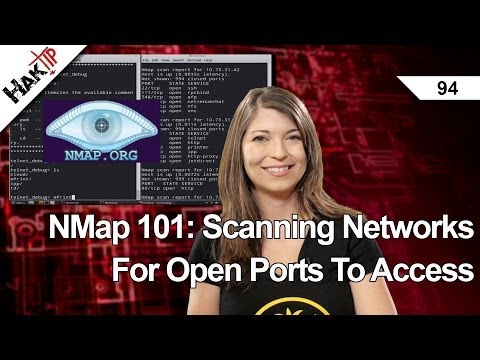
Internet security companies can use Nmap to scan a system and understand what weaknesses exist that a hacker could potentially exploit. As the program is open-source and free, it is one of the more common tools used for scanning networks for open ports and other weaknesses. Nmap includes an advanced port scan option that is used to scan firewalls to determine their connection state and rulesets. The TCP ACK scan (-sA) creates and sends a packet to the target with only the ACK flag set.

Unfiltered systems will respond with a RST packet for both open and closed ports. If an ICMP error message or no response is received, the port is considered filtered by a firewall. Of course, performed incorrectly, it can take up a large part of the working day… not the best solution. Unfortunately, in some cases, due to lack of investment, IT pros are reduced to hunting for patterns in log files, a reactive approach to fault-finding. Isn't a proactive, real-time approach to monitoring a better and more productive use of IT's time and resources?

Some try to develop their own application but costs end up more than a commercial tool and/or offer fewer features than the commercial equivalent. As a techie, if you need to convince management of the viability of a good network monitoring tool then review this article from John McArdle. Kali Linux is perhaps the best-known distro aimed at penetration testing and it's crammed with open-source hacking tools. It may not be the only one, but it will serve to demonstrate the logical approach used to penetrate a network.

Have a look at the sheer number of hacking tools available in Kali Linux by default . A direct link to the Exploit Database ensures the hacker has access to the latest in verified application vulnerabilities. In an earlier article, Greg Mooney defined a port scanner and demonstrated how port scanning on your own network allows you to see what potential attackers will see when scanning your network.

Logically, monitoring avenues of attack command-line profound benefits on security and being aware of the attack methods used can only help protect your network. Let's look at some of the standard tools that penetration testers use to verify security. Doing a port scan costs the attacker almost nothing, and sometimes you get lucky. In The Art of Intrusion, Kevin Mitnick gives examples of where such attacks do pay off in real life. In a simple system, its easy to simply lock down all of the ports.

In a more complicated IT network, its harder to prove there is no business logic reason for an open port, and first rule of IT is "do not upset the business," so they may be left open. Mitnick's book gave the example of one case where there was a jury rigged serial connection accidentally exposed to the internet. The attacker presumes it was a one time cludge to solve an issue which was never dismantled after its use was no longer required.

Years later, it was actually the attack vector found and exploited by the hackers. It's important to note that port scanning is not solely used for nefarious purposes. In this article, we explain what port scanning is, the different types of port scanning, and how to protect yourself from attackers using port scanning to gain access.

The next step is to sweep the target network to find live nodes by sending ping packets and waiting for response from the target nodes. ICMP messages can be blocked, so an alternative is to send a TCP or UDP packet to a port such as 80 that is frequently open, and live machines will send a SYN-ACK packet in response. Ports exist either in allow mode, or deny (closed; blocked) mode.

If your mail server is in a state of readiness to receive SMTP traffic, we call that "listening on port 25." That means port 25 is open. The main reason you interject a firewall between the Internet and your system is to get in the way of outsiders trying to access open ports. The applications on your network's machines can open ports without waiting for your knowledge or permission. Some, like peer-to-peer file sharing or video conferencing software, open ports with the single-minded obsession of a frenzied border collie.

Each of those open ports becomes another potential hole in your security, gullibly accepting whatever is sent to it, unless you take proactive steps to block it. Some malicious software acts as a service, waiting for connections from a remote attacker in order to give them information or control over the machine. Many important applications like database servers, web servers, file transfer services, etc., use dedicated ports. To harden the security of system/servers, system administrators usually secure these ports by either denying access to them by unknown users/services or changing the default port number to some other value. Nmap also allows options that give the attacker more control over the packets sent. The attacker can set the rate at which packets are sent, since changing the timing to space out the packets can help avoid raising the target's suspicions that it is being scanned.

If the rate is set too fast, packets can be lost, and incorrect results will be returned. The attacker can also fragment the packets to avoid intrusion detection systems, many of which only look for the whole suspicious packet to be sent at once. You'll most commonly detect scans and sweeps from Script Kiddies or other automated, semi-intelligent attacks. More experienced Black Hats will scan more slowly, generally slow enough to avoid being detected by a firewall.

This technique of sending port scanning packets infrequently over a long period of time is known as a slow scan. The difference is that instead of scanning one system on multiple ports, with portsweeping, multiple systems are scanned on the same port. For example, if you want to exploit a particular SQL vulnerability, you need to find which systems are running SQL Server. You can use portsweeping to scan a network for systems that can potentially be exploited.
A port scan is a common technique hackers use to discover open doors or weak points in a network. A port scan attack helps cyber criminals find open ports and figure out whether they are receiving or sending data. It can also reveal whether active security devices like firewalls are being used by an organization. Nmap is one of the most popular and advanced network scanner tools.



No comments:
Post a Comment
Note: Only a member of this blog may post a comment.